January 2026 - Fieldsview Farm Work Flow

Happy New Year!  We always love the new year and the earliest parts of January because for us it feels not just like turning over a new calendar year, but also diving into a new farming season.  On the farm, December felt like a decidedly strange month due to the early snow and freezing temperatures, and we found ourselves hoping for some warm days so we could get to sinking fence posts, planting bulbs and winterizing the farm.

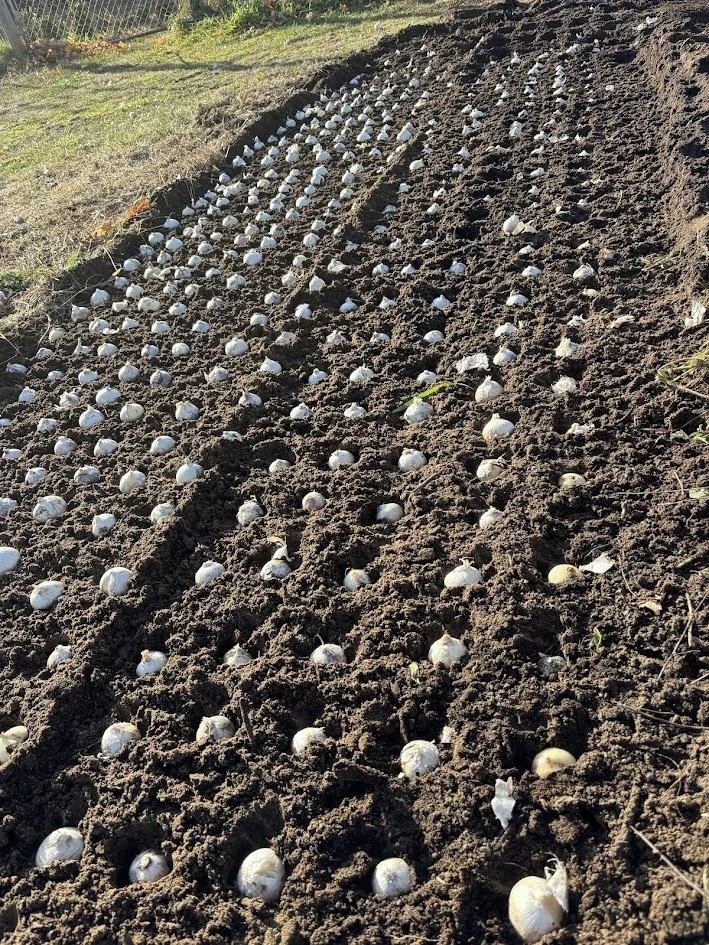
In total, we planted around 40,000 bulbs before year end, and we roughly doubled the size of our fenced-in field with the start of a new fence.  It was a busy end to the year!

Allium bulbs planted mid-November

But with January upon us, and with December’s final tasks finally completed, let’s turn our attention to January, because there is plenty to do this month, and loads of new things coming to our farm this season.

For January, there will be four main activities on the farm, starting with the beginning lisianthus seeding.  Over the next few weeks we will start around 10,000 lisianthus plants in a grow room in our basement.  Lisianthus are a notoriously slow grower, and if we don’t get them started now, they won’t be ready for transplant into our high tunnels come March/April.  Around 180 days will pass before we start harvesting them in July/August, but the wait is usually worth it for these beauties.  Many flower farmers opt to buy plugs for lisianthus and we have done that in the past.  However, we don’t love all the packaging and resources it takes to ship plugs plus we like starting seeds. 

Our second January activity will also mostly occur in our basement as we will begin the process of splitting and inventorying the 100 or so crates of dahlia clumps that we stored this fall.  For those not familiar, in addition to producing an astonishing range of beautiful flowers throughout a growing season, dahlias also multiply their tubers as well, and for those willing to do the work, those tubers can be split before planting again to expand plantings for subsequent seasons.  In general, one tuber planted in May can produce between 3-10 new tubers before being dug in the fall.

This past year we grew around 2,500 dahlia plants, about 30 varieties.  Going into next year we will expand production of some varieties, reduce production of others, and eliminate some varieties all together based on what grows and sells well for us.  We will also introduce about 15 new varieties and expand overall production to around 3,500 plants.

For those of you doing the math at home, you might be thinking that the 2,500 dahlia plants we grew last year will produce far more tubers than the 3,500 that we’re planning for this coming season, and if so, you would be correct.  Last year we had enough extra supply of tubers that we were able to hold a small tuber sale in April, which was a surprising success.  This year we are planning to hold another, slightly larger sale - more information on that coming soon.

Our third activity will be general maintenance on our tools and equipment - oiling and sharpening snips and pruners, changing tractor fluids, maintenance on small engine equipment, etc.  And once that work is done, we’ll put the newly sharpened tools to work with our fourth task, pruning and coppicing all of our shrubs to maximize their productivity for harvest in the 2026 season.  Many of the shrubs we grow can be harvested at multiple stages - in bud, in bloom, or after bloom for foliage.  Harvesting at the right time, and harvesting the correct way, is the key to ensuring they fill their proper rolls in the coming year.  In total, we have about 600 shrubs to maintain, which we should be able to do in a few short days of outside work.

And that’s about it for our January work flows.  Our goal is to stay busy, check these tasks off our list, but also to keep a slightly slower paced work day as we recharge for when the work really kicks in a handful of weeks.  In this way, it’s nice to try to find some harmony between our work day and the shorter day lengths of winter, getting work done while the sun is up, and transitioning to leisure when it goes down.  We hope you’re finding some time for leisure too, and thanks for checking in on us and our January farm tasks!

Amy and Derek


Winter Sowing

processed_IMG_1172.JPG

It's February. 

processed_PXL_20210114_182544298.jpg

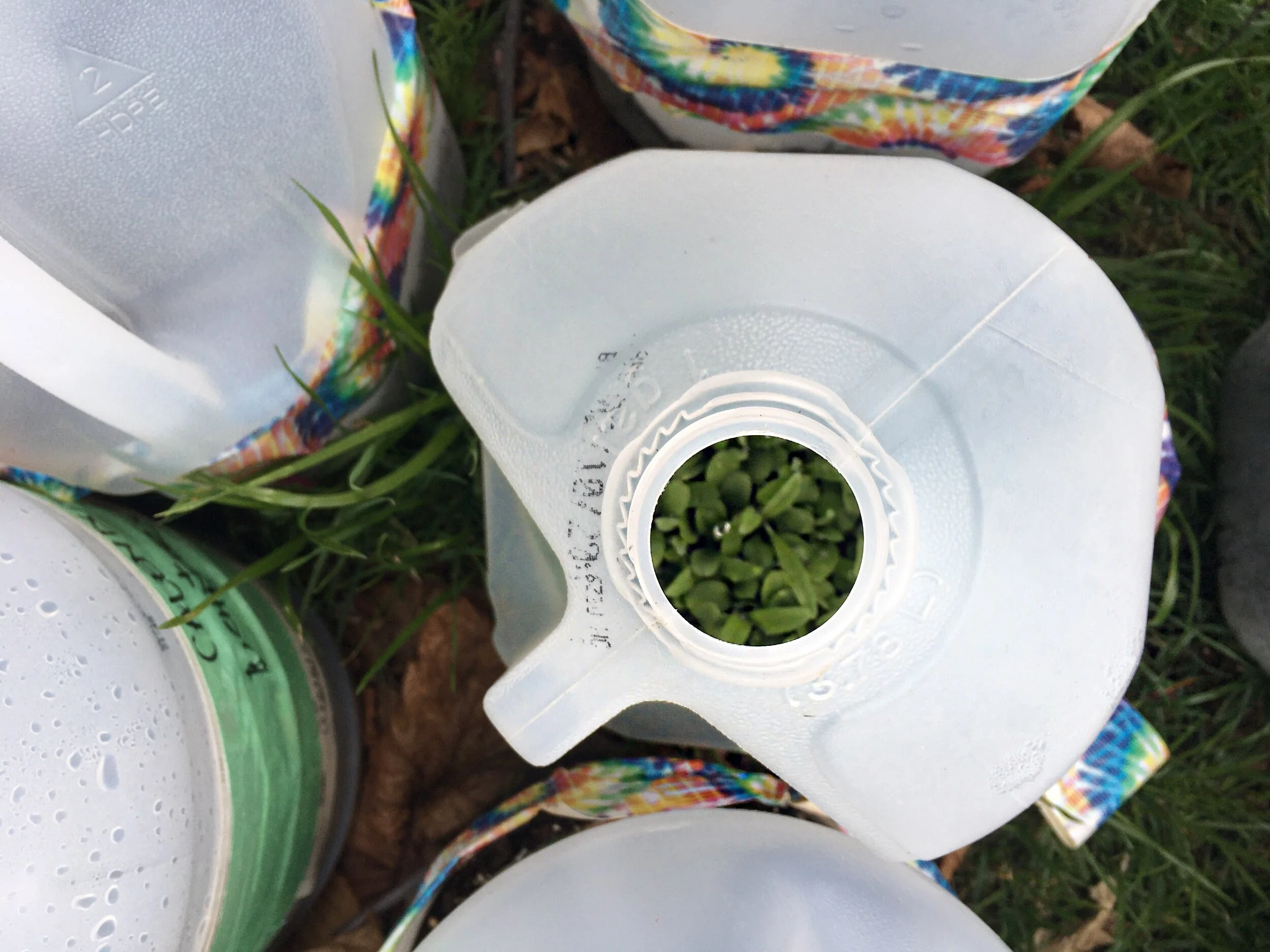
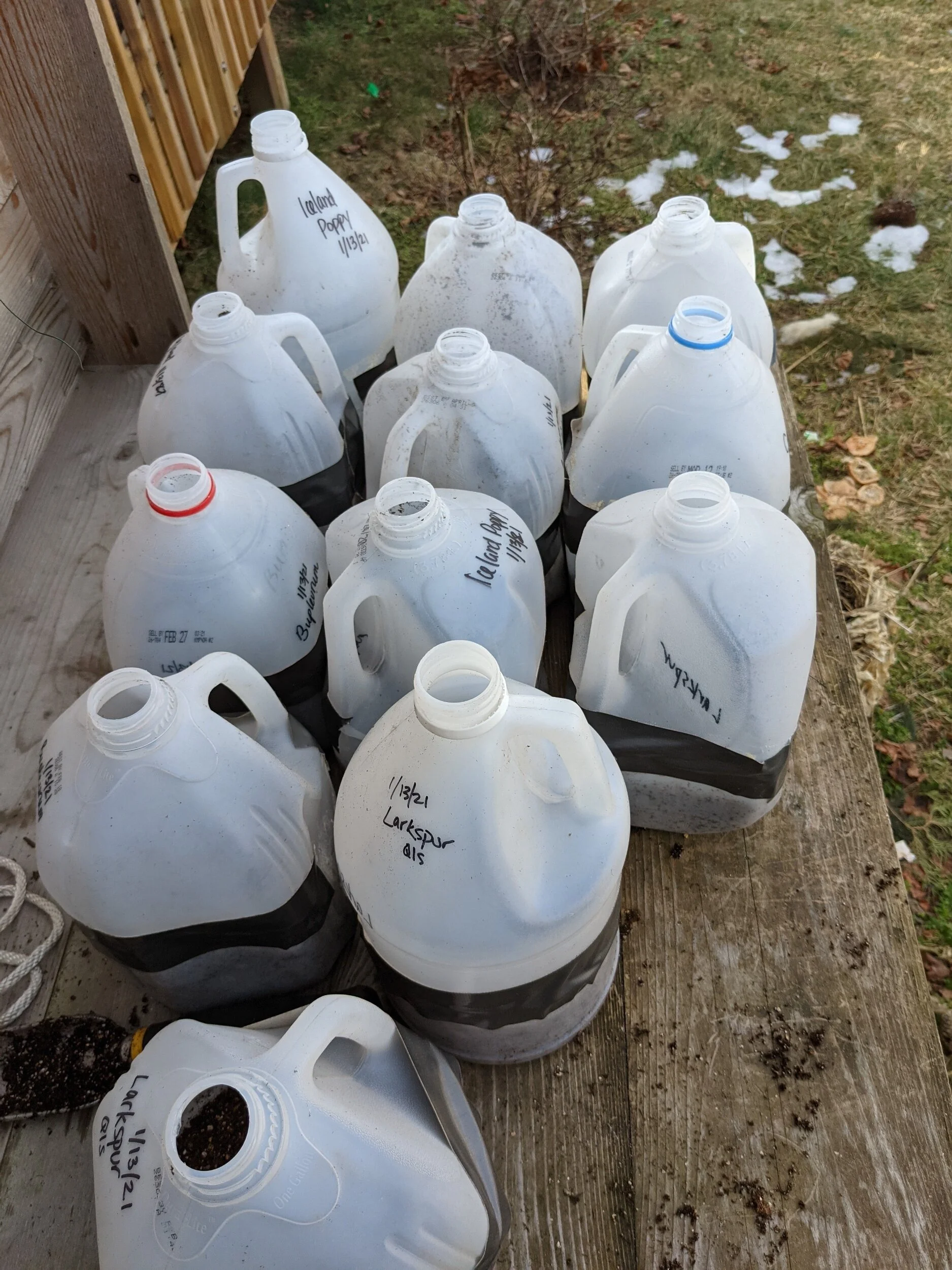
It has been a snowy and cold month so far here at Fieldsview Farm, and whenever temperatures drop this low (and for this long) we like to pass the time by thinking about our flower fields!  For flower growers, this is a great time of year for organizing and planning, and we have even started planting some seeds!  Yes, the ground is frozen solid and covered by a foot of snow, but that doesn't stop us from winter sowing, a practice of turning milk jugs (or similar containers) into miniature greenhouses, giving sown seeds a head start once temperatures start to rise. 

This is our second year starting seeds with winter sowing, and we're encouraged by our success from last year.  Our winter sown plants from last year had an advanced start compared to seeds sown in the ground, didn't need to be hardened off like plants grown in a traditional greenhouse, and gave us the chance to get our fingers in the dirt when the ground outside was frozen and unworkable.  

So, should you find yourself itching to escape the cold and snow to flowery visions of summer, read below for instructions on how you can start your own winter sowing practice.  This technique will work well for perennials or any other plants that are cold hardy, so grab your potting soil and gloves (and a recycled milk jug) and get growing!

Steps for winter sowing:

1. Obtain a milk jug.  Or water jug.  Or vinegar jug.  Basically any clear plastic container that is food safe.
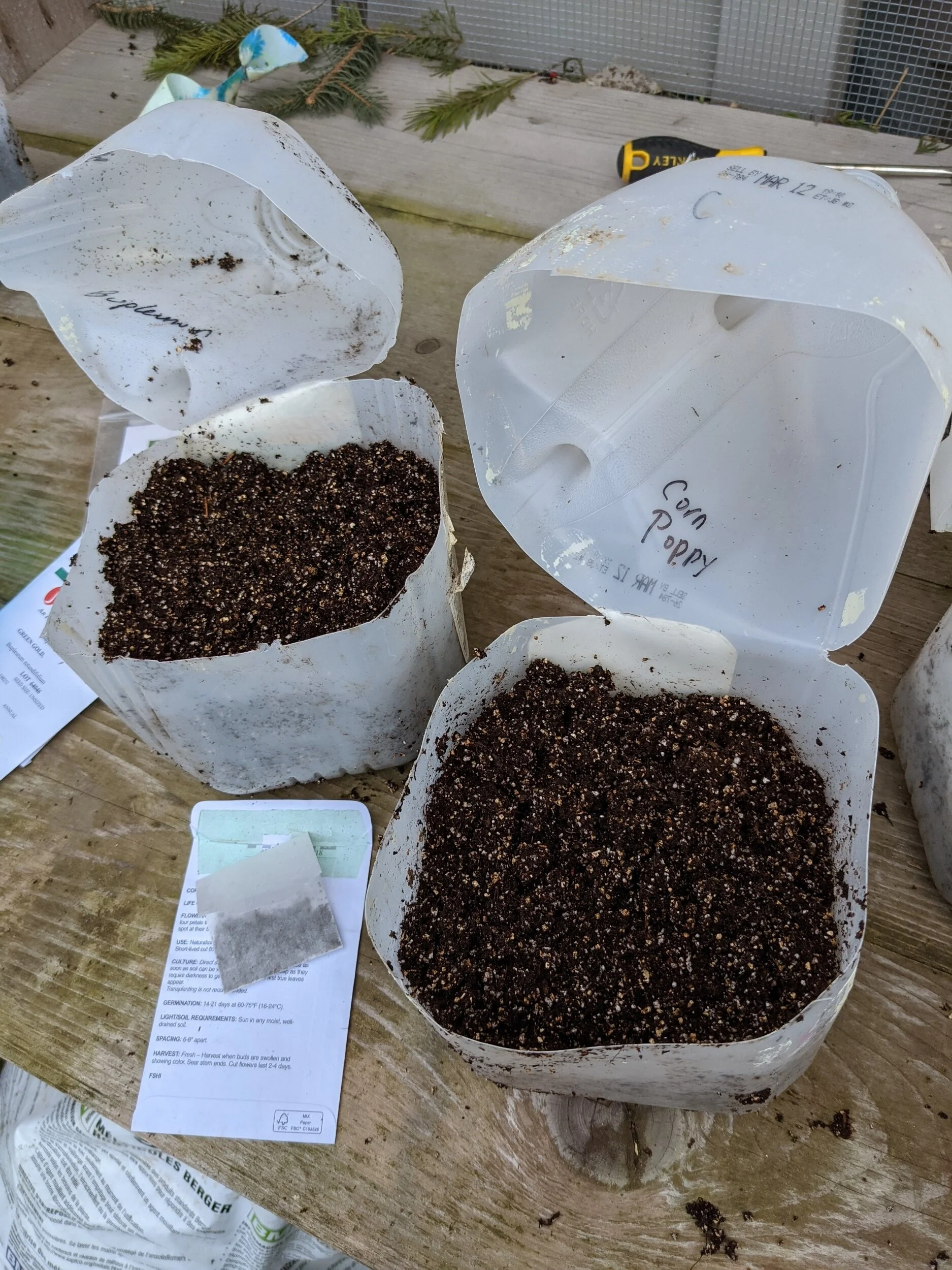
2. Poke drainage holes in the bottom of your jug and cut nearly in half  below the handle so it can be opened and closed as though hinged.  The original lid from the container can be discarded.
3. Fill your container with damp potting soil and sprinkle seeds on dirt. 
5. Close the jug at the hinge and place a layer of duct tape over the cut to keep the jug closed.
6. Set your jug outside in the snow and forget about it.  Water from melting snow will (theoretically, if the temperatures ever get above freezing) provide water for your seeds and (eventually) seedlings. 
6. Check in the spring for sprouts and then plant in your garden when they have 2-3 sets of leaves. 

Examples of flowers that do well with this method are bachelor's button, larkspur, delphinium, poppies, and snapdragons.  It also a great way to start herbs and vegetables that are cold hardy.

processed_PXL_20210114_190856953.jpg

Top Five Flowers of 2020

We have been doing lots of reflecting, planning, and pondering flowers the past few months as we get our seed orders in and plot out our flower field. It's been so enjoyable to look at all the pictures from last season and thought it would fun to share our TOP 5 Flowers of 2020.

IMG_6266.jpg

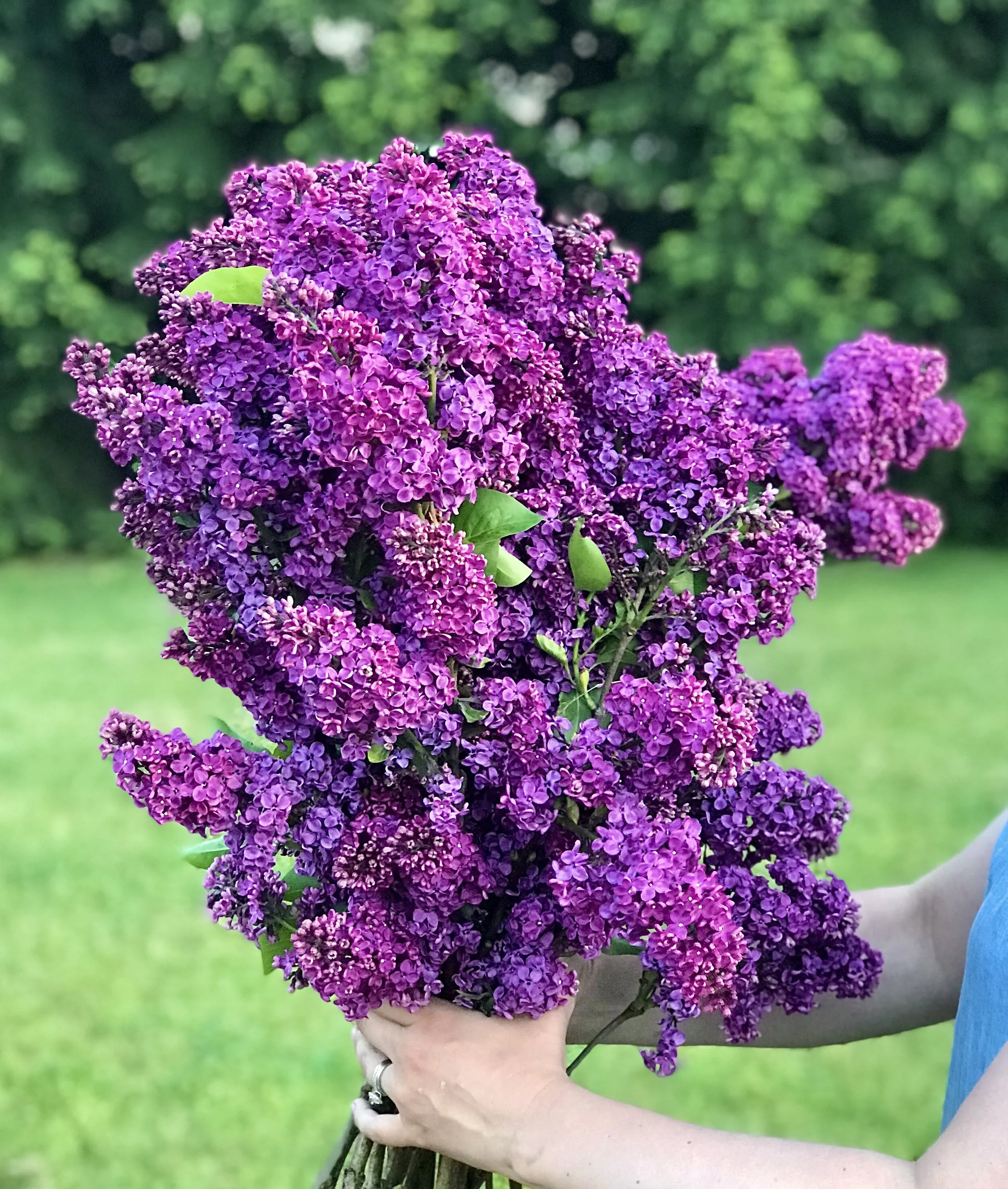
First up at #5, LILACS! Our lilacs were literally the first flowers we sold this year. Shout-out to anyone that came when we first had just a picnic table and a broken umbrella. The lilacs are so fleeting but their fragrance and beauty can't be topped. We love them so much, we planted 25 more bushes in the spring. Look for them again next May!

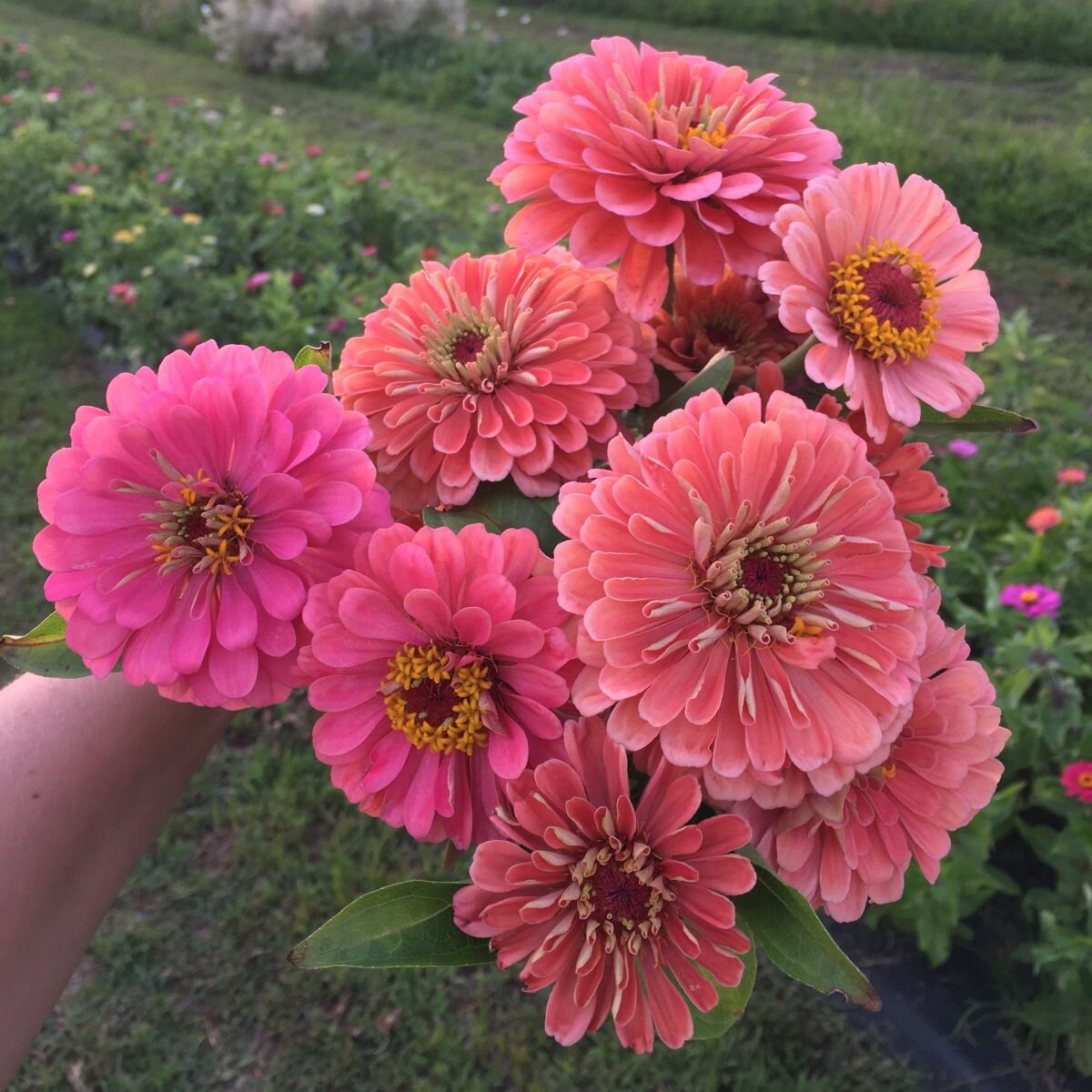
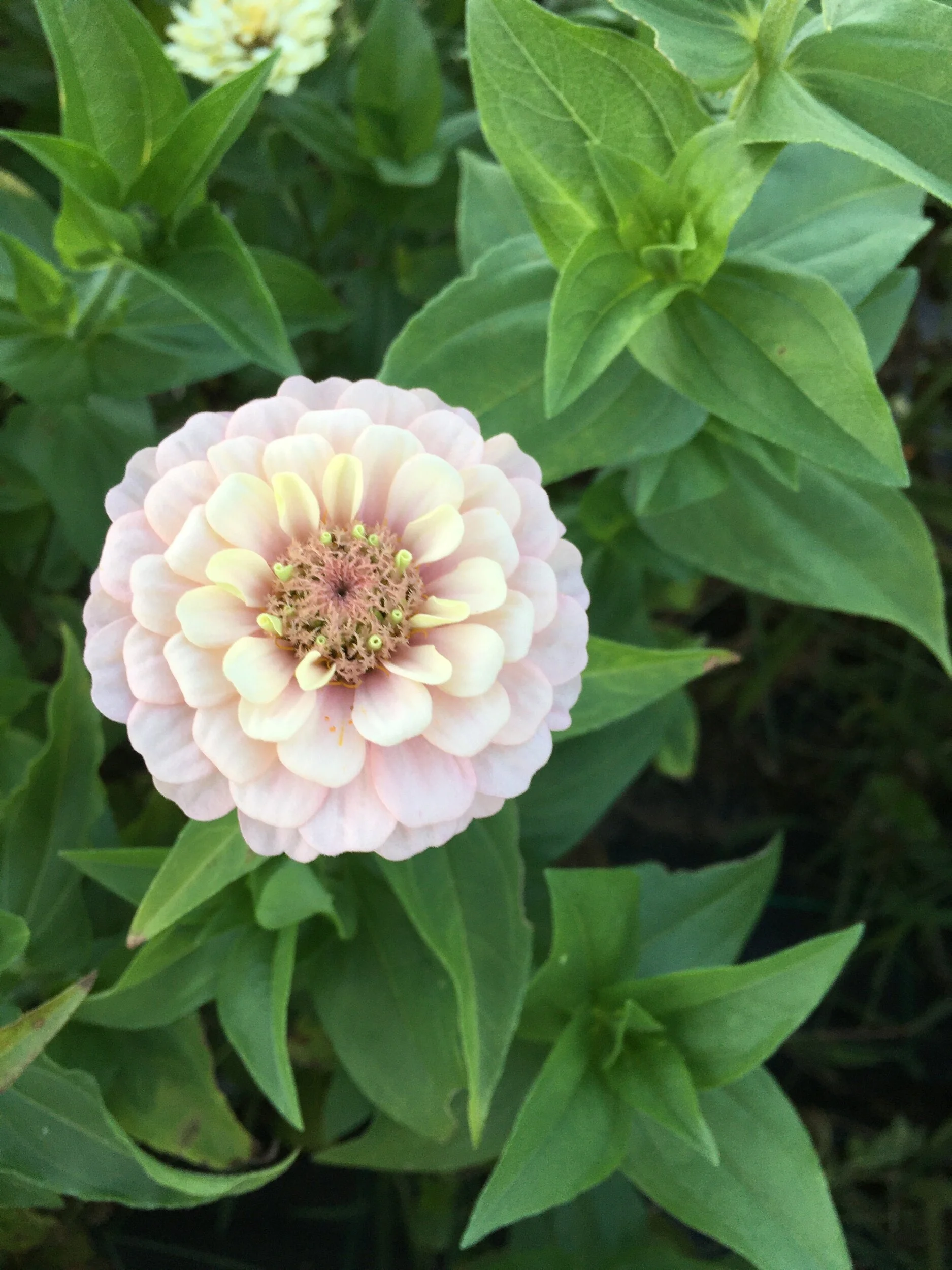
Next up at #4 are Zinnias! Zinnias start blooming and just don't stop. Zinnias also get a top spot because they taught us a lot. They taught us the importance of not transplanting on a 90 degree day and to not put 3+ seeds in a tray and then rip the roots apart. They also taught us about Japanese Beetles. Despite all the trouble though, they really do brighten up a bouquet. Next year we will be trying a bunch of different varieties that are sure going to be stunning.

zinnia.jpg

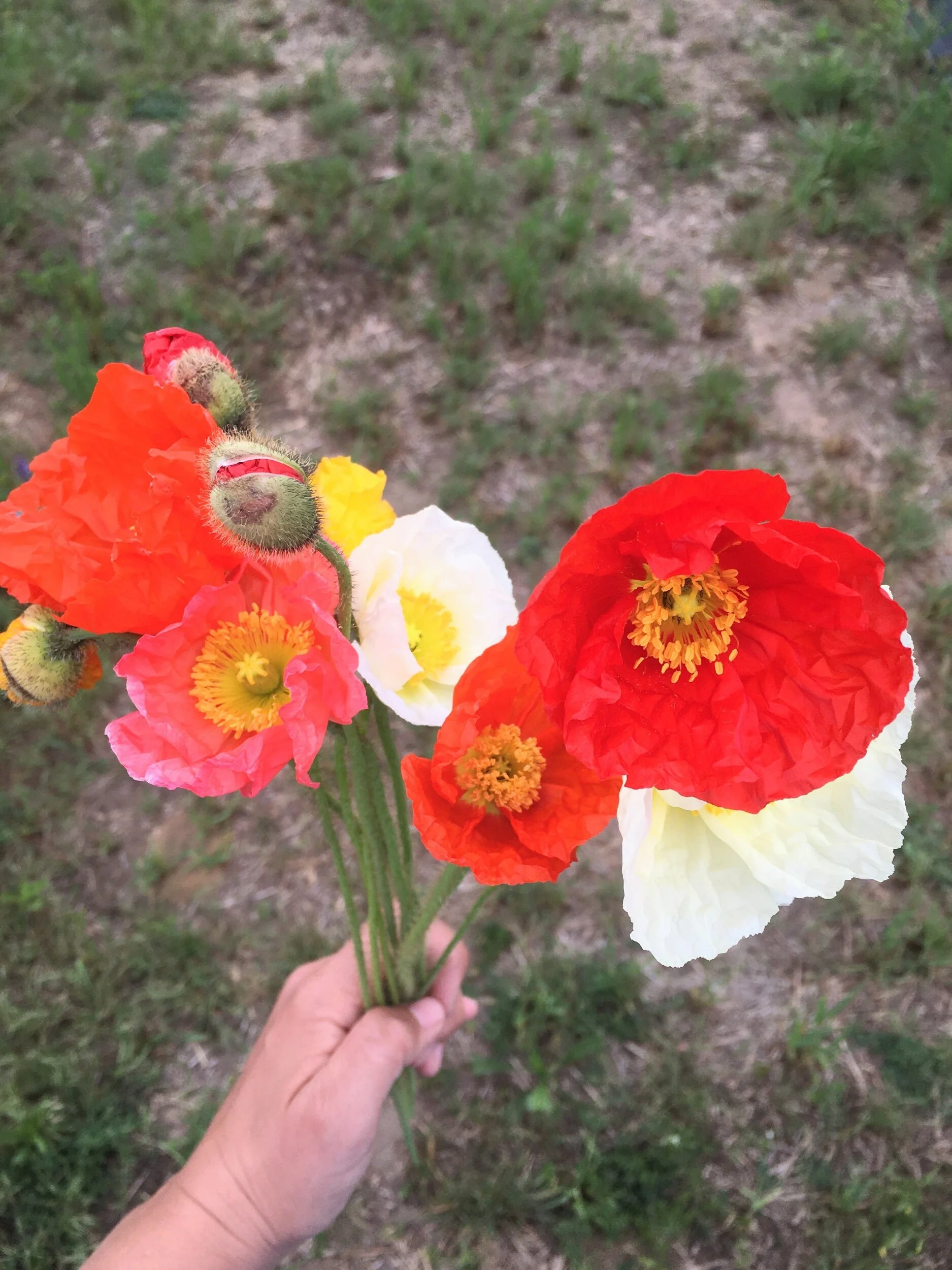
Here comes #3, the Iceland Poppy! Oh, they are so gorgeous. The paper thin petals hardly look real. Poppies were new to us and were challenging to grow from seed. But next year we’ll have them figured out! While the bloom time is short and the vase life is brief, they will always be on top of the list because of their beauty.

processed_IMG_1901~2.JPG

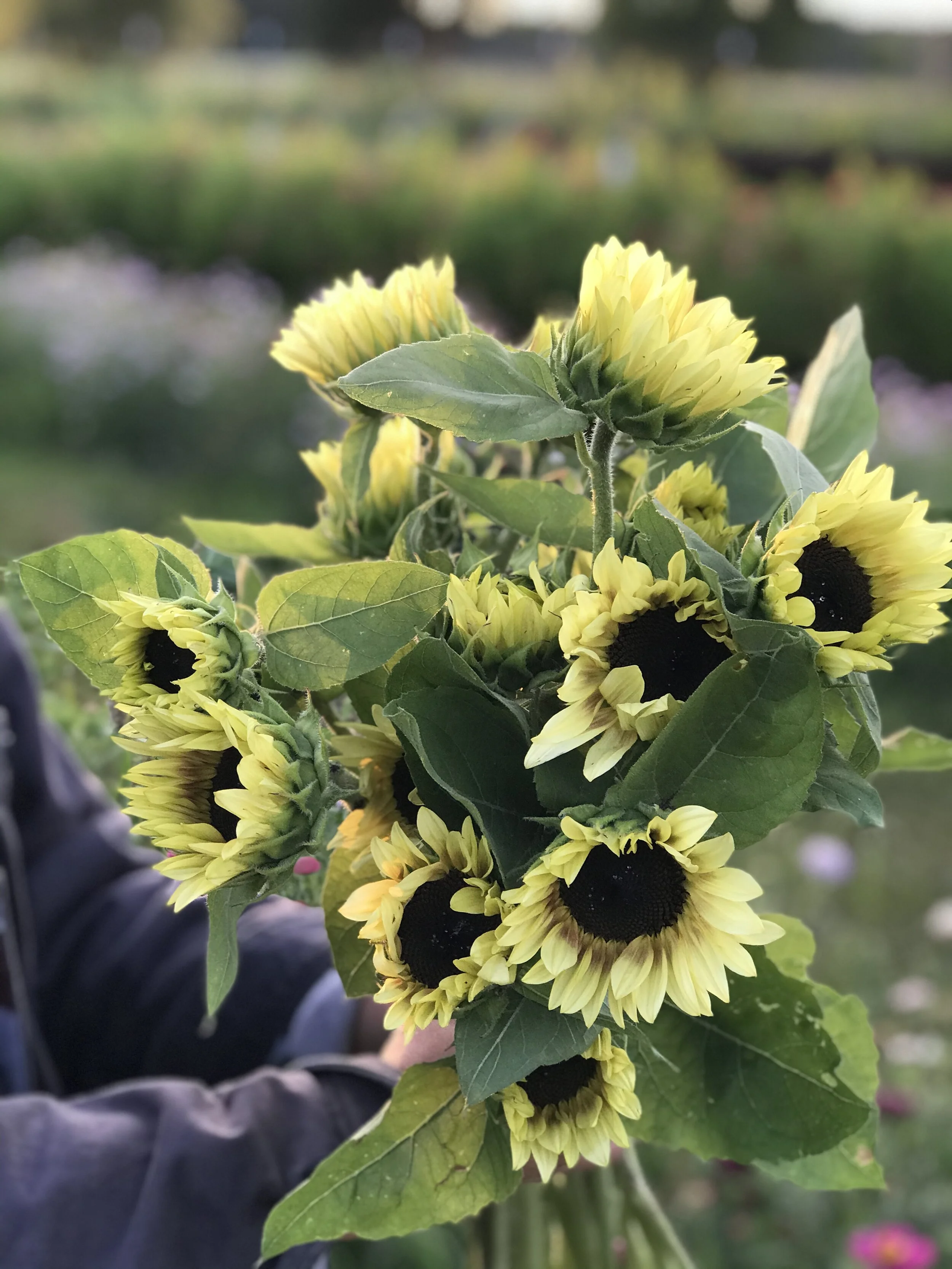
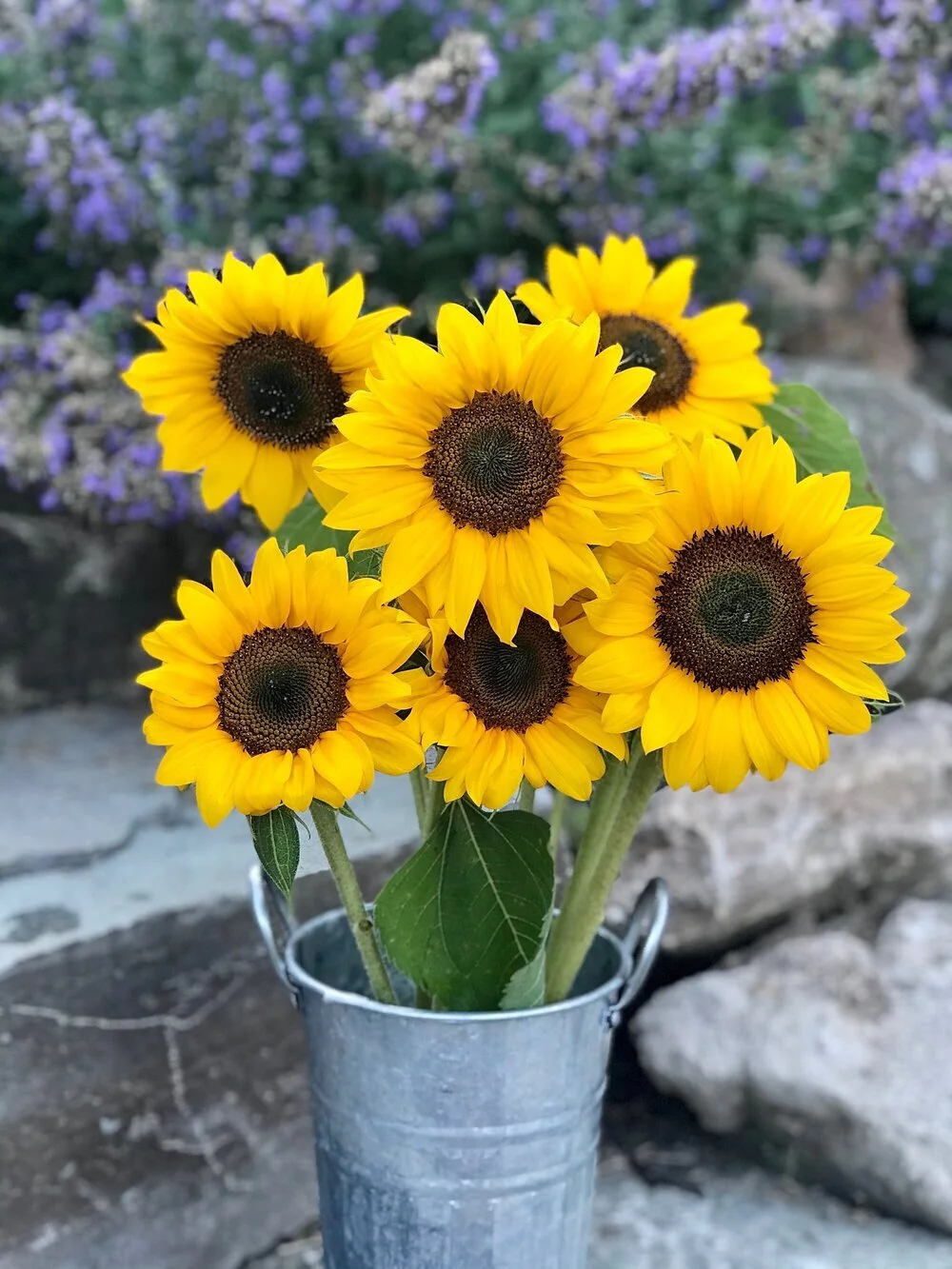
#2 goes to Sunflowers! Sunflowers get the easy award. Many of our sunflowers were direct seeded which means no transplanting is necessary. They are also awesome because they can stand on there own. What is better than just a bouquet of sunflowers? We will be succession planting our sunflowers next year to hopefully have a steady supply all summer.

IMG_7554 (1).jpg

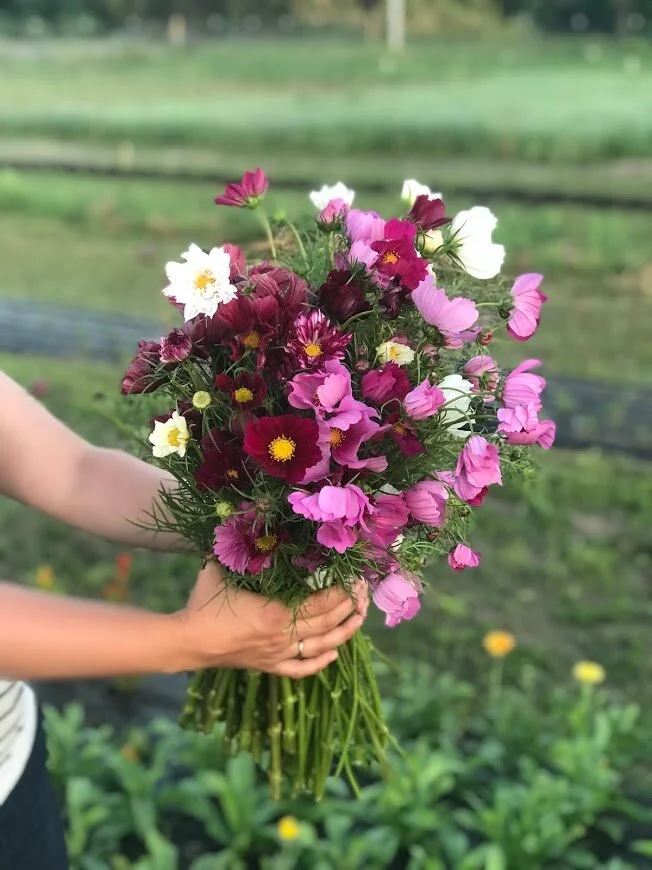
And the number #1 flower of 2020, Cosmos! Cosmos were really the backbone of our flower field this year. There was a cosmo is 99% of the bouquets we made this year. They started blooming in June and didn’t stop until October. They are easy to grow and they grow so fast, weeds aren't usually an issue. There isn’t anything prettier than watching a patch of cosmos swaying in the wind. Just wait until you see all the varieties of cosmos we are going to have next summer! It’s going to be amazing!

cosmos June handful.jpg

Three Easy Flowers to Grow by Seed

Want to bring joy and light to your yard this summer? Plant a few cut flowers! The smallest patch of dirt can be transformed into beautiful blooms by choosing the right seeds to plant. Seeds are a small investment that will reap great rewards. However, some flowers are easier to grow than others. For sure success try the varieties listed below!

These three flowers all will do well planted straight into the ground so no need to mess with plastic trays and potting soil. Find your sunniest patch of ground and plant the seeds just under the surface (about a 1/4 inch deep), covering lightly with soil.

  1. Cosmos - one of the easiest flowers to grow that will reward you with cheerful blooms all summer long. Cut regularly to promote continuous blooms. Try to cut when the petals are just starting to open for the longest vase life.

  2. Zinnias - similar to cosmos, zinnias will bloom all summer long if regularly harvested. Squeeze the stem directly under the bloom - you’ll know the flower is ready to harvest when the stem feels firm. Alternatively, you can give zinnias the ‘wiggle test:’ Grab the stem and wiggle the bloom, if it is floppy wait to pick it. If it stays upright, it’s a good time to pick!

  3. Sunflowers - These flowers are a dream to start from seed. It’s so easy, even the birds can do it! However, note that if you plant a single stem variety they only produce one bloom during the growing season. For continuous blooms, look for branching varieties that will continue to bloom once picked.

Please share your seed success with us next time you visit Fieldsview Farm!

processed_IMG_2574.JPG
processed_IMG_2823.JPG
Adjustments(11).jpeg