It's February.
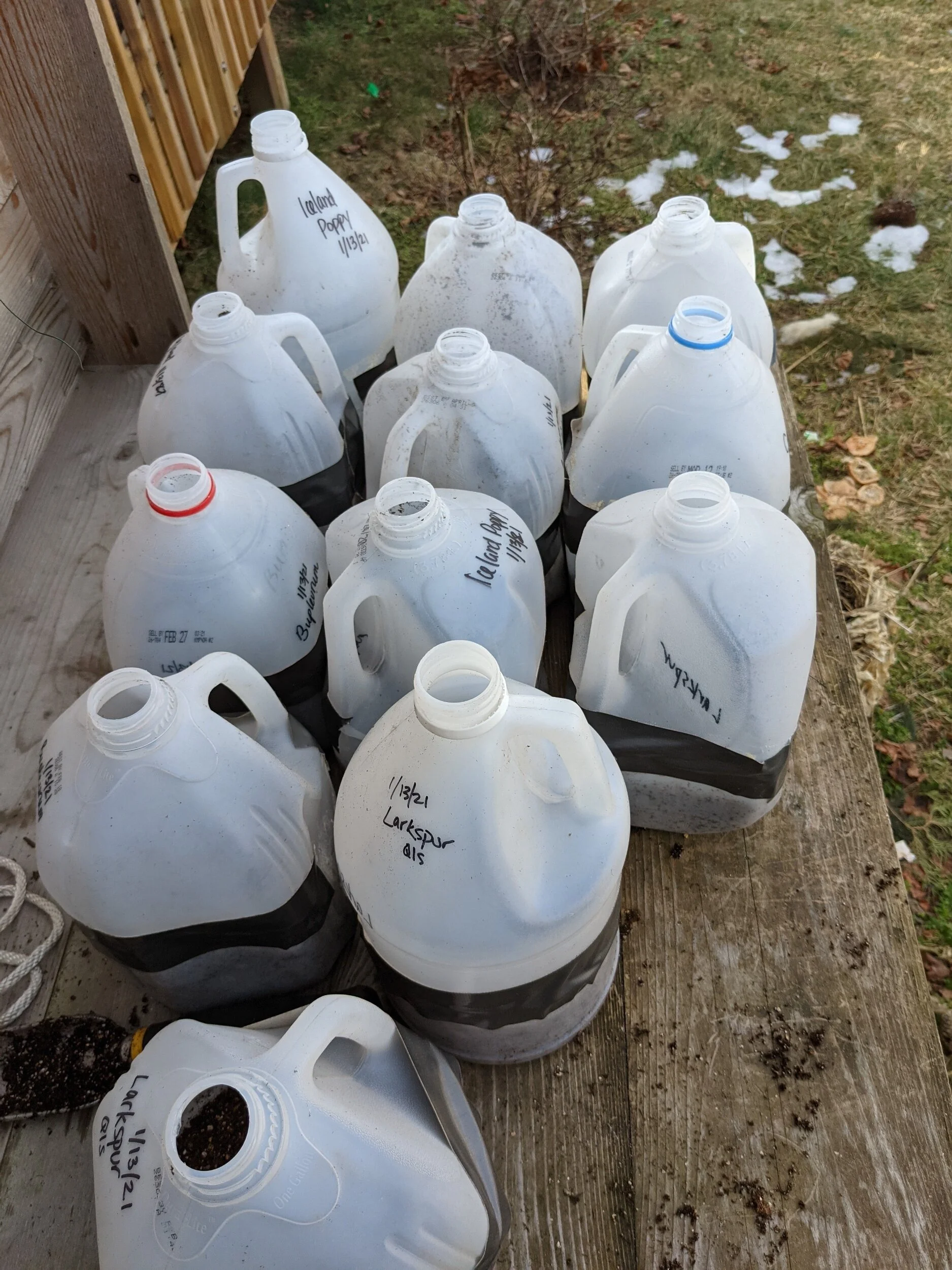
It has been a snowy and cold month so far here at Fieldsview Farm, and whenever temperatures drop this low (and for this long) we like to pass the time by thinking about our flower fields! For flower growers, this is a great time of year for organizing and planning, and we have even started planting some seeds! Yes, the ground is frozen solid and covered by a foot of snow, but that doesn't stop us from winter sowing, a practice of turning milk jugs (or similar containers) into miniature greenhouses, giving sown seeds a head start once temperatures start to rise.
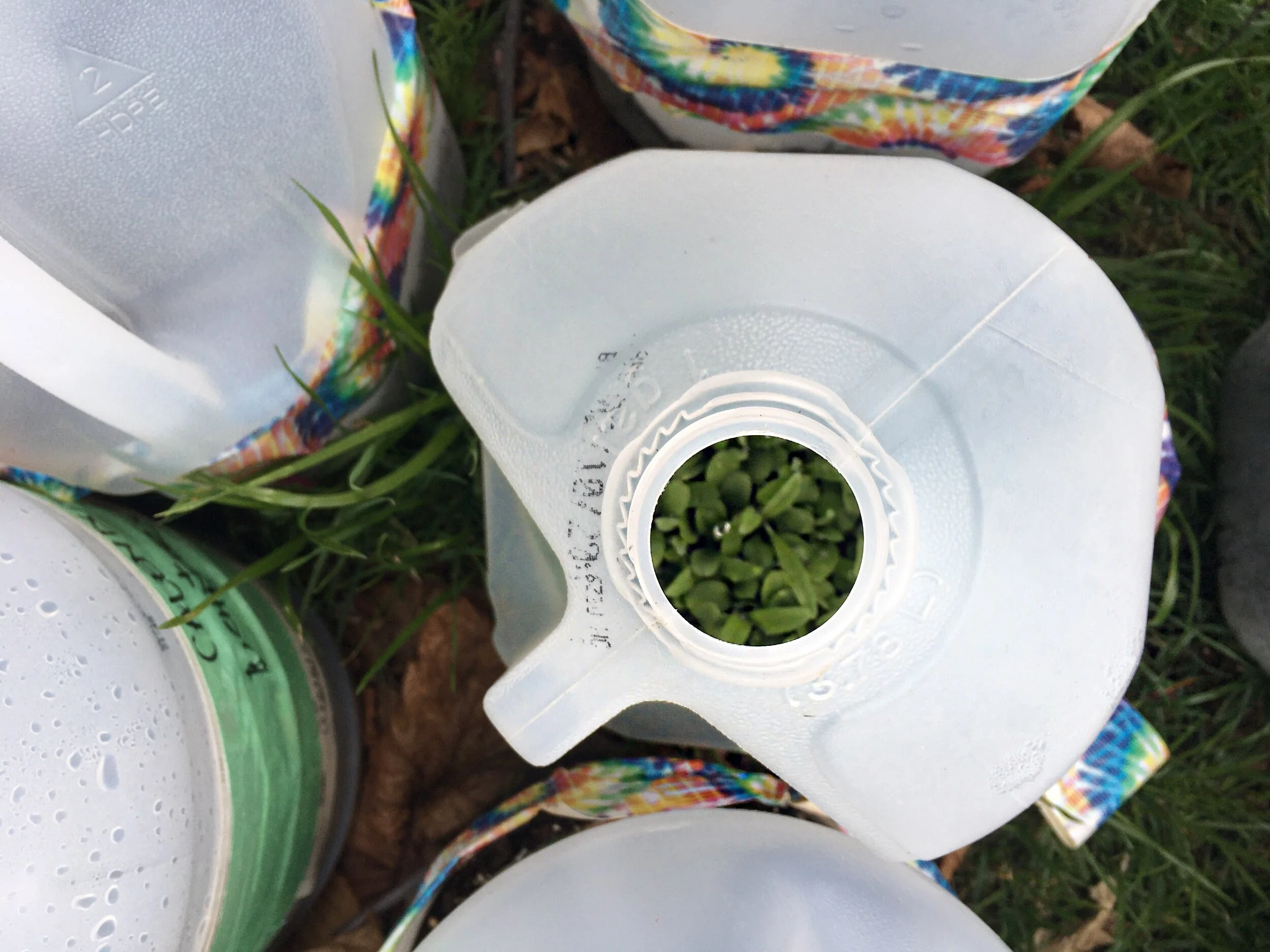
This is our second year starting seeds with winter sowing, and we're encouraged by our success from last year. Our winter sown plants from last year had an advanced start compared to seeds sown in the ground, didn't need to be hardened off like plants grown in a traditional greenhouse, and gave us the chance to get our fingers in the dirt when the ground outside was frozen and unworkable.
So, should you find yourself itching to escape the cold and snow to flowery visions of summer, read below for instructions on how you can start your own winter sowing practice. This technique will work well for perennials or any other plants that are cold hardy, so grab your potting soil and gloves (and a recycled milk jug) and get growing!
Steps for winter sowing:
1. Obtain a milk jug. Or water jug. Or vinegar jug. Basically any clear plastic container that is food safe.
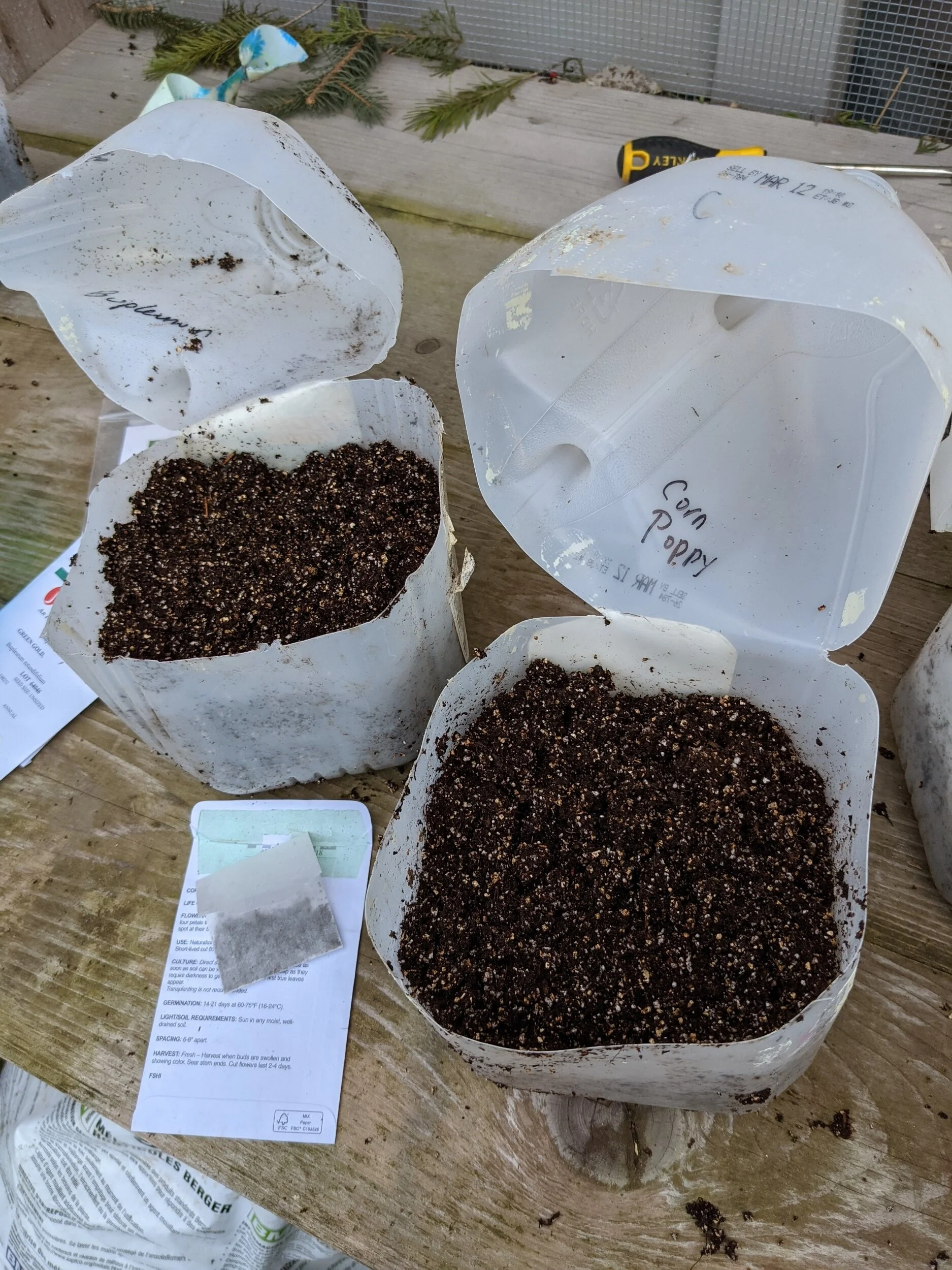
2. Poke drainage holes in the bottom of your jug and cut nearly in half below the handle so it can be opened and closed as though hinged. The original lid from the container can be discarded.
3. Fill your container with damp potting soil and sprinkle seeds on dirt.
5. Close the jug at the hinge and place a layer of duct tape over the cut to keep the jug closed.
6. Set your jug outside in the snow and forget about it. Water from melting snow will (theoretically, if the temperatures ever get above freezing) provide water for your seeds and (eventually) seedlings.
6. Check in the spring for sprouts and then plant in your garden when they have 2-3 sets of leaves.
Examples of flowers that do well with this method are bachelor's button, larkspur, delphinium, poppies, and snapdragons. It also a great way to start herbs and vegetables that are cold hardy.